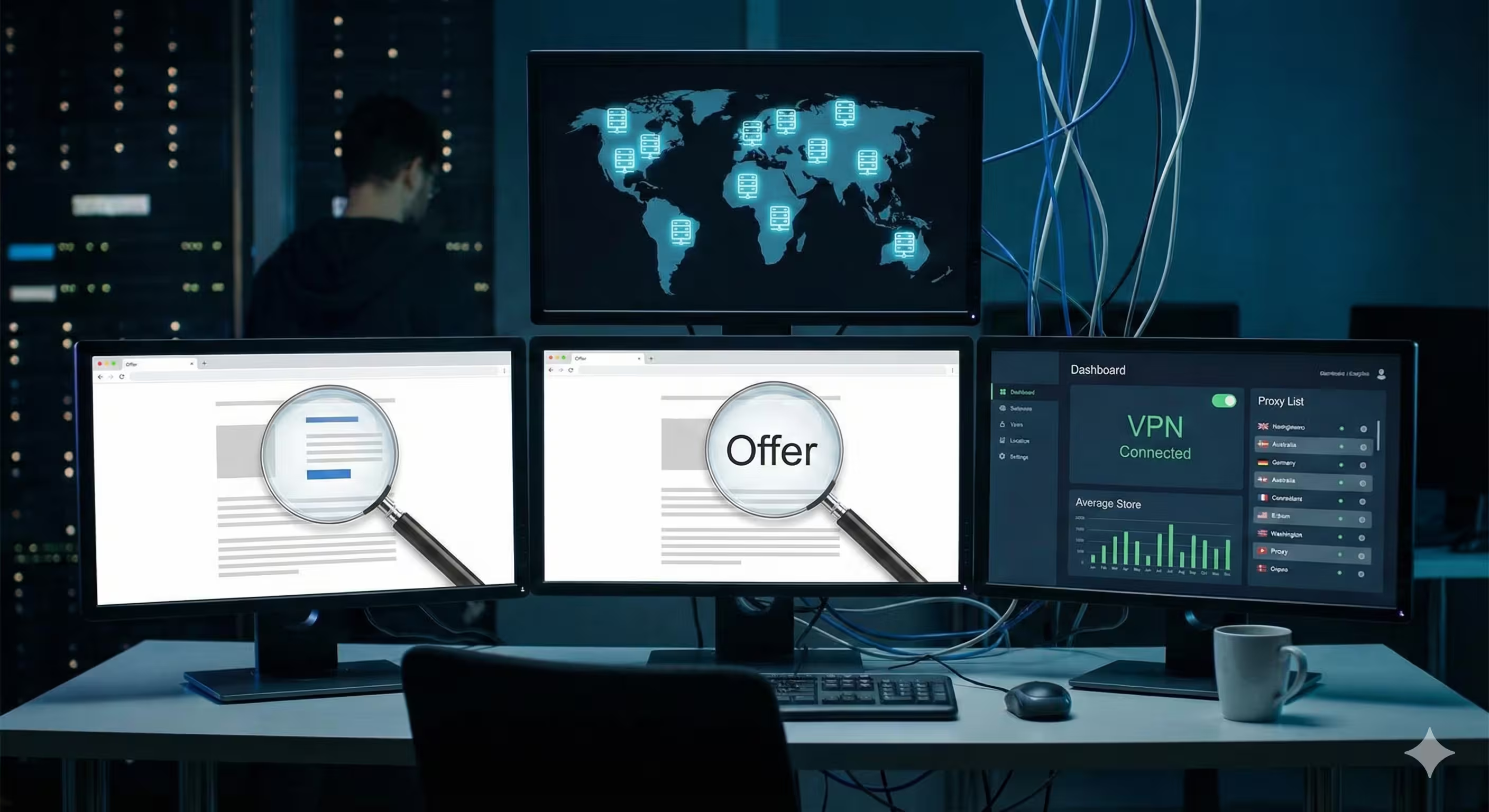
How to Use VPNs & Proxies to Test Dating Offers in 2026 (USA-Focused Guide)
Accurate offer testing is critical in affiliate marketing — especially when campaigns target multiple USA cities or states. Many affiliates lose money not because the traffic is bad, but because they never saw the offer the way real USA users do. Using VPNs and proxies to simulate real USA traffic from different cities, carriers, and devices helps you avoid costly mistakes, validate funnels, and significantly improve conversion rates before spending real ad dollars.
This 2026 guide explains why and how to use VPNs and proxies to test dating offers in the USA market, what to check, and how to ensure your campaigns see exactly what paying users see — so you can scale confidently in high-paying Tier 1 traffic.
Why Offer Testing With VPNs/Proxies Is Essential in the USA
Offers behave differently depending on location (city/state), device, carrier, browser, and connection type — especially in the diverse USA market.
Without proper testing, you risk:
- Promoting GEO-restricted offers (e.g., offer loads in NYC but blocks in rural Texas)
- Sending traffic to broken or mismatched pages (language/currency issues)
- Using creatives that don’t align with what users actually see
- Misjudging real conversion potential (desktop vs mobile, WiFi vs carrier)
In the USA, where CPCs are high ($0.50–$5+ in dating), testing from real simulated locations saves thousands and prevents zero-conversion campaigns.
What Are VPNs and Proxies? (USA Testing Context)
Both tools let you appear as if you’re browsing from a specific USA location — critical for validating city/state behavior.
VPNs:
- Route your entire connection through a USA server (city-level options available)
- Easy to use for quick manual checks
- Best for testing full funnels (browser + device simulation)
Proxies:
- Route traffic at browser or app level (more granular control)
- Offer precise USA residential IPs (city/state level)
- Ideal for advanced testing, automation, and avoiding detection
For USA dating campaigns: Use residential proxies or city-specific VPNs (NYC, LA, Chicago, Miami, Texas, etc.) — datacenter IPs often get flagged or show different offer versions.
How USA Affiliates Use VPNs to Test Dating Offers
VPNs are perfect for fast, manual validation before launching USA campaigns.
Typical use cases:
- View offers from specific USA cities (e.g., NYC vs rural Texas)
- Check lander redirects & smartlink routing (does it load the right funnel?)
- Verify language, currency, and offer availability (USD, English, USA-specific)
- Test mobile vs desktop behavior (iPhone vs Android in LA)
- Confirm pre-lander/lander speed & rendering (USA 5G vs WiFi)
Quick VPN test = catch issues before spending $100–$1,000+ on USA traffic.
How Proxies Improve Testing Accuracy for USA Campaigns
Proxies give granular control — essential for USA city-level precision.
Benefits in 2026:
- Test multiple USA cities simultaneously (NYC, LA, Chicago, Miami, Houston)
- Simulate real residential IPs (avoid datacenter flags)
- Reduce cloaking/detection issues (offers load as real users see them)
- Validate smartlink routing logic (does it match city to correct offer?)
- Automate testing (scripts/proxies for high-volume checks)
Residential proxies (city-level USA) are the gold standard for serious USA dating affiliates.
Testing GEO-Targeted USA Offers (City/State Level)
Many USA dating offers are city/state-restricted or optimized differently.
Using VPNs/proxies allows you to:
- Confirm correct GEO routing (e.g., NYC offer loads in New York IP)
- Check fallback behavior (what shows if primary offer is unavailable?)
- Ensure offers load properly in target cities (LA, Chicago, Miami, Texas)
- Verify city-specific personalization (e.g., “Matches in NYC” text)
Prevents wasted USA clicks and zero conversions from mismatched GEOs.
Testing Mobile & Carrier Traffic in the USA
Mobile behavior varies widely by carrier, device, and connection in the USA.
Advanced testing includes:
- Mobile IP simulation (Verizon, AT&T, T-Mobile carriers)
- WiFi vs carrier testing (urban vs rural USA)
- Android vs iOS behavior (iOS often higher EPC in USA dating)
- 5G vs 4G/LTE differences (speed impacts load & CR)
Critical for mobile-first USA dating offers — test from real simulated USA mobile IPs.
Using VPNs/Proxies With Tracking Tools for USA Accuracy
Testing should cover the entire USA funnel — not just the offer.
Affiliates often test:
- Tracking links & pixel firing (from NYC, LA, Chicago IPs)
- Postback functionality (real USA conversions sync?)
- Smartlink/offer rotation behavior (city-specific routing correct?)
- Pre-lander/lander rendering (mobile USA devices)
Use trackers (Voluum, RedTrack, Keitaro) + city-specific VPN/proxy to ensure data accuracy before scaling USA traffic.
Common Testing Mistakes USA Affiliates Make
- Testing only from home country/location (misses USA-specific issues)
- Ignoring mobile/carrier experience (70%+ USA traffic)
- Using datacenter IPs (offers show different versions or block)
- Testing once and assuming stability (offers change frequently)
- Not documenting city/state results (NYC vs Texas can differ 2×)
Proper USA testing prevents costly surprises at scale.
Best Practices for Offer Testing in the USA
- Test before launching any USA campaign — every time
- Re-test offers weekly (networks update restrictions)
- Use residential/city-specific USA IPs when possible
- Document results (city, device, carrier, what loaded)
- Test full funnel (ad → pre-lander → offer → conversion)
- Combine VPN/proxy with tracker simulation
Consistency in USA testing prevents zero-conversion disasters.
Conclusion
Using VPNs and proxies to test offers is a core skill for serious USA dating affiliates in 2026.
By simulating real USA traffic from key cities (NYC, LA, Chicago, Miami, Texas), validating GEO routing, device behavior, and funnel flow, you protect your budget, avoid mismatched offers, and dramatically improve campaign success in the high-paying Tier 1 market.
In USA affiliate marketing, testing isn’t optional — it’s insurance against wasted spend and lost profits.