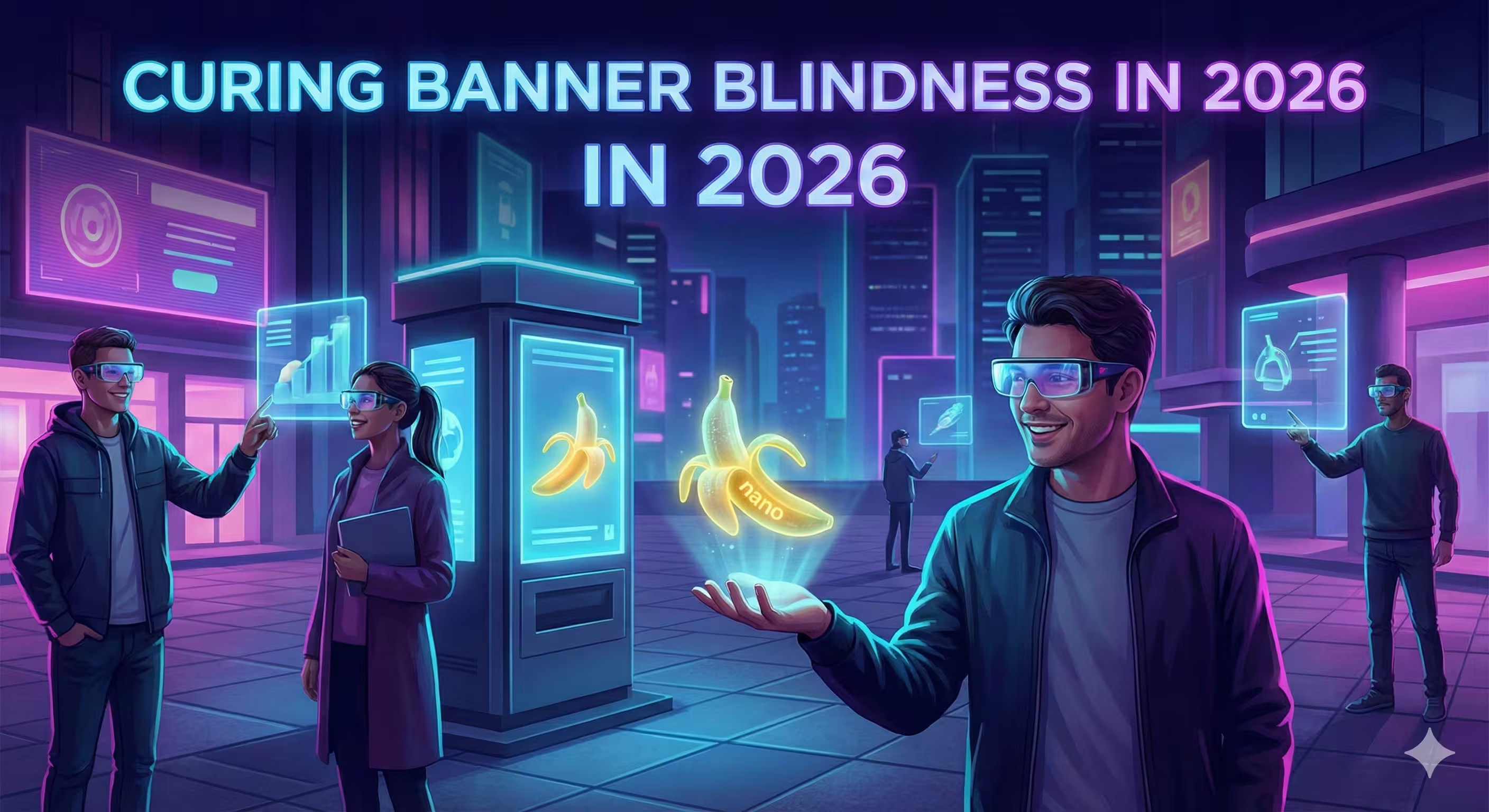
Curing Banner Blindness in 2026: The Definitive Shift to Attention-Worthy Advertising
For more than 25 years, banner blindness has quietly undermined display advertising. Users' brains have become experts at filtering out anything that screams “ad” — those familiar rectangular boxes, flashing animations, sidebar slots, and predictable placements. By 2026, this instinctive avoidance has reached peak levels: eye-tracking studies show that up to 86% of users now exhibit strong banner blindness, with traditional display ads frequently delivering click-through rates (CTRs) below 0.5%, and many campaigns falling even lower. The classic interruptive model — plastering static banners across pages — is effectively obsolete in the USA and beyond.
The winners in 2026 aren’t fighting for eyeballs with louder or flashier interruptions. They are earning attention by delivering genuine value, blending seamlessly into the user’s flow, and treating attention as the scarcest resource online. This shift is especially powerful for dating CPA campaigns in the USA, where emotional resonance and trust drive conversions far more than interruption.
Why Traditional Banners Became Invisible
The human brain prioritizes efficiency: it rapidly categorizes and discards perceived noise to focus on relevant content. Predictable banner formats (300×250, 728×90, skyscrapers) trained users to completely skip entire zones of a webpage — often referred to as the “golden triangle” or “F-pattern” avoidance zones in eye-tracking research.
Key culprits driving this blindness in the mid-2020s and continuing into 2026 include:
- Predictable Placement: Users know exactly where ads live (top banners, sidebars, footers) and subconsciously ignore those regions.
- Irrelevance & Generic Messaging: Programmatic floods of one-size-fits-all creatives rarely match actual user intent, needs, or current context — especially in high-intent USA dating traffic.
- Intrusive & Disruptive Design: Auto-play video with sound, overlays blocking main content, aggressive pop-ups, and flashing elements trigger immediate hostility and accelerate ad-blocker usage (now 40%+ in the USA).
- Ad Overload: With people now encountering thousands of ads daily, the brain’s filtering mechanism has become even more aggressive.
The result? Wasted ad budgets, plummeting engagement, and long-term erosion of trust in digital advertising — particularly painful in the competitive, high-CPC USA market.
The 2026 Solution: From Interruption to Integration and Value Exchange
Success now depends on ads that feel like enhancements rather than obstacles. Leading USA marketers have shifted to strategies that prioritize relevance, interactivity, authenticity, and emotional resonance — turning passive scrolling into meaningful (and often enjoyable) engagement. This is especially effective for dating offers, where trust and curiosity drive conversions.
1. Native Advertising 3.0 – True Platform Mimicry
Gone are the days of obvious “sponsored” labels slapped on barely disguised sales content. In 2026, native advertising has evolved into content that perfectly adopts the platform’s native form, tone, pacing, and function — especially on USA-heavy platforms like TikTok, Instagram, and native networks.
Examples that crush in USA dating campaigns:
- On TikTok/Reels/Shorts: short, entertaining, trend-native videos that feel 100% user-generated (“POV: Your first message went viral in NYC”)
- On news sites or long-form blogs: in-feed recommendations, elegant data visualizations, or story-driven widgets that match the editorial voice (“5 signs they’re into you — real stories from Chicago singles”)
- In social feeds (Instagram, X): recommendation cards, carousels, or threads that are visually and tonally indistinguishable from organic posts
Performance data consistently shows native formats delivering 2–3× higher CTRs than traditional banners (often 0.16–0.38% vs. ~0.11% averages), with significantly better purchase intent and brand lift metrics in the USA. The golden rule remains: if it looks or feels like an ad, it fails. If it feels like valuable content, it wins attention.
2. Hyper-Personalization Powered by Real-Time AI
Static creatives are now considered legacy. AI dynamically generates and assembles ad variations in real time based on immediate user context — a game-changer for USA dating campaigns.
Examples driving massive USA results:
- Behavior + intent signals: showing the exact dating app the user viewed 47 minutes ago, in their most-viewed city
- Environmental awareness: incorporating local weather (“Perfect date night spots in rainy Seattle”), current time of day, or device type
- Predictive personalization: using machine learning to anticipate needs (“Based on your recent searches, here’s 20% off premium matches in Austin”)
- City-level dynamic copy (“Your type is online in Miami right now”)
Dynamic Creative Optimization (DCO) platforms now handle thousands of micro-variations at massive scale while staying compliant with privacy rules through contextual and first-party intent-based targeting — boosting USA CTRs 50–150% over static ads.
3. Interactive, Playable & Immersive Formats
Passive consumption no longer competes. The highest-performing USA ads actively invite participation and break the autopilot scroll:
- Mini-games, quick quizzes, polls, spin-to-win wheels that reward engagement (“What’s your dating style? Find out in 10 seconds”)
- 3D product customizers or AR try-ons (e.g., virtually “trying” a date outfit or previewing a match profile)
- Expandable rich media with subtle, tasteful animations or hover-reveal storytelling
- Playable video or branching interactive narratives that unfold based on user choices (“Choose your next message”)
These “lean-in” experiences generate exponentially higher engagement rates because they shift users from passive mode to active involvement. Emerging AR/VR integrations are further amplifying memorable brand moments in USA dating campaigns.
4. Creativity Reclaims the Throne
For years data and targeting overshadowed creative execution. In 2026, standout visual design, clever storytelling, emotional resonance, humor, and authenticity have become the ultimate competitive advantages — especially in USA dating where emotional connection drives conversions.
Winning creative principles:
- High-quality, authentic visuals (real people, not stock models)
- Witty, relatable copy & cultural relevance
- Genuine brand voice & storytelling
- Clean motion design (without aggressive flashing)
- Trend-aware aesthetics that blend into feeds
The most successful USA campaigns lean into these elements — often outperforming hyper-targeted but generic ads.
Final Thoughts
Overcoming banner blindness in 2026 is not about finding a new ad-tech trick — it’s a fundamental mindset shift from attention extraction to value exchange.
The brands and affiliates thriving right now — especially in USA dating — are the ones creating advertising that people actually want to see: relevant, entertaining, useful, respectful, non-intrusive, and emotionally resonant.
By fully embracing native integration, AI-powered hyper-personalization, interactive formats, and fearless creativity, marketers are transforming a decades-old problem into a powerful competitive edge.
The future of digital advertising belongs to those who respect users’ attention and reward it with experiences genuinely worth their time — and in the USA, that shift is already driving outsized ROI.